Saturday, October 25, 2014

Individual Education Plans (IEPs), Reading Response, Media Literacy, Ballet Creole, Painting, Rewrites and Homework

It is hard for me to imagine that I did not post at all this week.  There are not many occasions where there is such a gap in my postings.  It is a very busy time of year.  This week rocketed by and it is not showing any signs of easing up until after Parent/Guardian Conferences.

The IEPs went home today.  A number of students raced out of the classroom not picking them up, even though I announced they were going home.  As I explained in the attached letter (inside the envelope), the IEP is a working document that will change over the year based on how things are going in class.  Please return the last page of the IEP with your signature.  Keep the IEP and bring it with you, if you would like, during the conferences in the coming month.

I must say that I find the IEP very cumbersome and impersonal.  For me, they almost seem to become the learner, but they are just words and symbols on a page and in a data base.  It is a guide for structuring learning, but there is something about the rigidity of it that seems constricting.  So, by thinking of it as a working document that has some flexibility and conversation starting possibilities, I am able to make peace with having to complete it.

I spent a fair bit of time trying to explain to the students what a Reading Response was.  As part of the Reading strand in Language, it is a form of a Reading Strategy to assist students in understanding what they read.  I took an article we all read -- on the idea of eliminating Homework -- I modeled a response.   I did this for them, while they watched.  Here it is:

I changed the format of the response because I found it had too many prompts on the left column.  I had intended to hand out the new version to the students but forgot to.

The article the students had to the response to related to an article on Ebola from the publication What in the World.  Here is a photo of the front page of the article.  For copyright reasons, I am not going to post the entire article but a photo of the first page:

Even before we started reading the article we looked at the images and headlines to begin the reading process; they provide clues as to what may be going on.  Also, having a discussion, albeit small, about what the article might be about or what  they know about Ebola helps with developing an understanding.

In the middle section of the Reading Response form is a section on relating to the article.  I showed the students a video about a doctor from New York who recently returned from Sierra Leone who had contracted Ebola and was now under quarantine.  Learning about this allows them to make some further connections with what they are reading.

Here is the CBC link for a lot of information on Ebola.  It may provide some news stories for the students to read and make deeper connections to the article:  http://www.cbc.ca/news/world/topic/Tag/Ebola

Speaking of the Media, the students have completed working on their media boxes.  They will be used for looking at the Media Literacy strand and applying it to the Ideal Society project most of the students have started planning.


For the six sides of the cubes, they each explore one of the central parts of studying Media Literacy.

Here they are: 
For this project, we will only be looking at 2 of them:  #1 and #5.  As part of homework for this weekend, I have asked the students to bring in an example of an advertisement to share with the class.  By looking at some examples of ads, the students will begin to get a feel of how aspects of the Media work.

Last week I had my commentary on the importance of Multiplication.  This past week we learned the first of 5 steps of the JUMP Math approach to learning multiplication.  I applied some of those skills to a Math test involving fractions where knowledge of the tables was important.  I have to mark that this weekend and will return it on Monday.

I was pleased to see a few people take advantage of doing Rewrites to help improve the scores on the last Math test.  Here is a list of the final list of students who improved their marks by some hard work, desire, and effort:

The importance of learning the tables will become more evident with the work we begin this week that will involve understanding the relationship between Multiplication and Division.

In the realm of the Arts, we had a visit from Ballet Creole.  I am shortlisting a few photos that I will send to the company, and later upload to the blof, but I just took this panoramic image with my phone:


I got around to mounting the paintings we did for the I am poem on some wood I found in my garage.  These two photos aren't the greatest, but you will get a sense of how they look as a class.


Each painting required a one line caption from the poem.
As I prepare to write the Progress Reports for the first 7 weeks of school, I will be going through my records to see what work has and has not been done by the learners in the class.  The students are provided countless reminders and time to complete work.  I have been very diligent with getting the agenda signed on most days, but some students will often say they have forgotten it at home.  The agenda will help them stay on top of the work they need to do.

HOMEWORK
- obtain an example of an advertisement
- complete the Reading Response on the Ebola Virus article
- complete the Math sheet, if it was not done on Wednesday
-spend some time outside  

Enjoy the sunny Saturday.


Sunday, October 19, 2014

The burden of Multiplication

Probably the most challenging aspect of Math for many students is learning the Multiplication Tables.  I learned my tables in Grade 4 and never forgot them.  It seems as though students do not know their tables. 


http://www.telegraph.co.uk/education/educationnews/10646712/Schools-must-go-back-to-basics-to-raise-maths-standards.html

According to an article I read online on The Telegraph from the UK, former Schools Minister, Nick Gibb, commented that students had to learn Math in the same way they would have to learn to play the piano:  "with repeated practise and committing methods to their long-term memory. " 

We have been working on Fractions in class and to move to the next level will require the students to develop their skills and confidence with learning the multiplication table.  I am going to post some links to places that may assist the students in Room 52 to learn their tables.  There are a number of games, I am sure, to be played online that relate to multiplying, but I believe it is key to learn the tables first and then to play.  No amount of playing will assist in the memorization and understanding of how multiplying works.

The first link relates to a school in British Columbia that posted a section of the JUMP Mathematics workbook that details how a student could learn his or her tables.
http://vschool.nides.bc.ca/math/Grade7/JumpMath/additional_support_materials_basic_number_sense_learn_times_tables_in_5_days.pdf

The other site is a graphic friendly tutorial:
http://www.wikihow.com/Learn-Multiplication-Facts

 I suppose it is possible to do this work using a calculator and I will have to proceed that way if  learning the tables becomes a hindrance.  In many ways, though, knowing the facts by memory will be quicker and neater than using a calculator, especially when it comes to understanding Improper Fractions and Mixed Numbers.

Consider the following images:


In Example 2, using a calculator would produce a decimal answer, which is still correct, but would not help in understanding how a Mixed Number looks as a whole number with a fraction.


I do not profess to be the expert on this matter that causes so many people, parents included, anxiety.  This is just my two cents and a gut feeling that knowing how to multiply is a key foundation to any future endeavors in Mathematics.  

Saturday, October 18, 2014

Word of the Day

Word of the Day - deiform: godlike or divine in form or nature. http://dictionary.reference.com/wordoftheday/archive/2014/10/18.html at Dictionary.com

Friday, October 17, 2014

YPT, Rewrites, Community Circle and High School

This coming Tuesday is the informative presentation at Bloor CI on making the transition from Grade 8 to Grade 9.  Unfortunately, due to a previous engagement, I will not be there.


Yesterday we had our short field trip to Young People's Theatre to see To Kill a Mockingbird.   I am already seeing a future Community Circle around some of the matters brought up in the play.  Before we left for home, I caught a shot of the group in the lobby of YPT.


The article we read last week on homework was a point of discussion in class on Wednesday. 


 Unfortunately, not all of the students participated.  This discussion is an attempt to develop speaking and listening skills that are important in life and part of the Oral Communication strand in the Language curriculum.  Not only that, but I would like to see the students develop their skills and confidence while talking.

The open-book Math test took place on Wednesday.  We had only 4 students achieve marks of 70% and higher.  Here they are:

Now, for students who scored C- and lower have the option of doing a Rewrite.  It is something I have been doing in Math for a long time.  It is an attempt to develop a deeper understanding of the mistakes they made on the test.  Basically, the students have to figure out what they did wrong and then make the corrections to the question.  If they do this, they are able to earn back half the value of the mark.  So, if a question is worth 2, and they do a Rewrite, they can earn 1 mark back.  On this test, it is out of 25.  Earning back 1 mark equals to a 4% increase in the result on the test!

Here is a model of how it may work (done by me) and an example from a former student I had.


Homework

Very excited about homework!

Enjoy the weekend.

Tuesday, October 14, 2014

Word of the Day - juvenescent: being or becoming youthful; young. http://dictionary.reference.com/wordoftheday/archive/2014/10/14.html at Dictionary.com

Sunday, October 12, 2014

Word of the Day + Happy Thanksgiving

Definition of accidence: http://dictionary.reference.com/browse/accidence at Dictionary.com

Friday, October 10, 2014

I am Art, feedback on problem solving, To Kill a Mockingbird

Happy Long weekend.

On long weekend, I do not usually give out homework, so I thought it was fitting to have the students read an article on homework.  Once this is done, they are expected to make a comment or observation during a Community Circle on Tuesday.

I apologize for the vertical view.  I will try to fix it over the weekend.  This student forgot this one on her desk.


We worked on developing a set of Success Criteria for our I am poem.  Here is the chart, along with some of the initial paintings produced this afternoon; very cool!


Mr. Chung has planned a class trip for the Grade 7s and 8s to Young People's Theatre to watch a stage production of Harper Lee's To Kill a Mockingbird.  The trip, including TTC fare, will be $10 and taking place on October 16th.

http://www.youngpeoplestheatre.ca/shows-tickets/to-kill-a-mockingbird/

My last post is to inform you that the Math test has been moved to Wednesday, October 15.  I have returned all Study Sheets and provided feedback on the group Problem Solving done on Wednesday.  Here is a panoramic shot of my feedback:


HOMEWORK:

Math test on Wednesday
Read article on Homework and be prepared to discuss 1 aspect of the article during Community Circle
To Kill a Mockingbird trip form and $10 for Thursday's trip
** Sub lunch money may be brought in on Tuesday**


Have a great long weekend.


Wednesday, October 8, 2014

Fraction Review + Study Sheet

Instead of trying to cram everything into one daily blog, which I may still do, I think it might be easier to read if I post them by subject.  In the case of the last post -- on sentences -- it is something entirely different from what I am posting now:  a review of solving questions involving the adding and subtracting of fractions.

For the upcoming test, the students will learn about how to make a Study Sheet as a way to review and consolidate their learning.  Here is an older example I did last year for learning how to multiply and understand how multiples work:

For this test, the questions will be based on the three type of questions we have looked at:

To challenge the class a little more,
I created three word problem type questions that they worked on in class.

Each question is based on the three questions to the right.

Usually the Math is not the challenge for the students; it is the comprehension (understanding) part of the questions.

I will go through each group's question and provide some feedback for them.  The questions looked liked this:

Here is the collection of responses for the word problems in a panoramic shot:


Once we have reviewed these questions, and feedback is provided on the Study Sheets, a test will happen.

Sentence Review websites

I was doing some research on some interactive games to get the students thinking about the mechanics of writing.  I was able to come up with a few links (there are a lot!) and I am sure the list will grow, but I do not want to overwhelm the class with too much information.

The games, some of which seem very easy, will be a good supplement to the work we are  doing in class.  Eventually, the students will be responsible for reviewing each of the sites and recording what they learned from playing/interacting with them.

A very basic review of Simple Sentences.


This site introduces the students to some of the vocabulary of creating sentences.  I will never ask the students to memorize definitions.  My hope is that they can apply what they are learning to the work they create.


The last game/review is a kind of test your knowledge type exercise on sentences.


I just purchased a really cool book for some creative, morning writing.  I think I will test-write it either this morning or tomorrow morning as the students arrive.


Tuesday, October 7, 2014

New York Times debrief

Our review of the NYT image, was reviewed today.  I was pleased to read so many insightful responses.  I modeled a sample response for the class:

We also took in a video of the flooding situation in Kashmir linked off the NYT website.


http://www.nytimes.com/video/multimedia/100000003099547/kashmir-flooding-leaves-thousands-underwater-175-dead.html


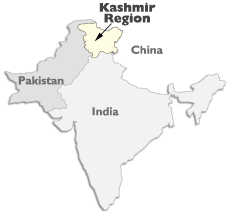
For those of you who don't know, Kashmir  is located on the border of China, India, and Pakistan.


Monday, October 6, 2014

Sentence Work 2 and Changing one denominator

I am assessing some of the homework that was done in writing this weekend.  In assessment, I get to see what part of the work causes the most amount of challenge for the students.  I am going to use this photo of a review on sentences to help us along:


A number of students did not do this homework.  I do not have a problem when a student attempts it, but does it entirely wrong.  When a student doesn't try to do it is a problem for me.

I have set up some lessons on the Promethean Board to help the students along.   I will report on that, when we get to them.  Please ask your son or daughter if they have completed this work.

As I continue with reading the sentence homework (9 students completed the work with 9 required sentences = 81 sentences + feedback), I thought I would look for a YouTube video that would assist in explaining the parts of a Complex Sentence more:


Here is a funny, attention grabbing video on Dependent Clauses.  I am having some problems uploading, so here is the link and an image from the video:
https://www.youtube.com/watch?v=7bIcAifNOf8


Here is a funny, attention grabbing video on Independent Clauses.


In Math, a number of students are grasping the work of changing only 1 denominator.  I may have posted this helpful note (which the students were to record in their notebooks), but I will do it again:

HOMEWORK:

Sub forms are due on October 10
Order forms for photos are due tomorrow
TTC Student photos are on Wednesday
Grade 8 Information Night 2 Bloor CI on October 21
**Outstanding HW** (ask a peer, look at HW chart)